
Common name: 2,4-D Amine Salt
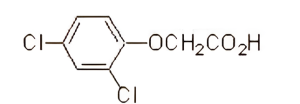
Chemical name: (2,4-dichlorophenoxy)acetic acid
Chemical class: Herbicide
Molecular formula: C60H60Cl2O3
CAS NO.: 94-75-7
Properties:
Some preparations of 2,4-D are contaminated with dioxins due to the manufacturing process.[7]
Tetrachlorodinoazo-p-dioxin (TCDD) is classified as “carcinogenic to humans” by International Agency for Research. M.p. 85-90°C; (tech., 65-84°C). B.p. 358.2°C (decomp.). V.p. (pure a.i.) 0.0267 mPa (25°C).
S.g./density 1.35 (73°C). In water 0.116 mg/L (25°C).
Readily soluble in most organic solvents, e.g. acetone 72.5, cyclohexanone, isophorone 61.5, dimethylformamide >50, chloroform 50-55, mostlyl oxide 40-50 (all in g/100 g, 25°C).
Mode of action:
Selective contact herbicide, absorbed more readily by the foliage (and especially the shoots) than by the roots, with very little translocation.
Usage:
Control of annual broad-leaved weeds and grasses in a variety of tropical and subtropical crops, by pre- or post-emergence application at rates in the range 0.25-2.0 kg/ha. Particular crops include tree fruit (including citrus), vines, nuts, cereals, maize, soya beans, peanuts, rice, cotton, bananas, peppermint, onions, garlic, ornamental trees and shrubs, and conifer seedbeds.
Normal Formulations:
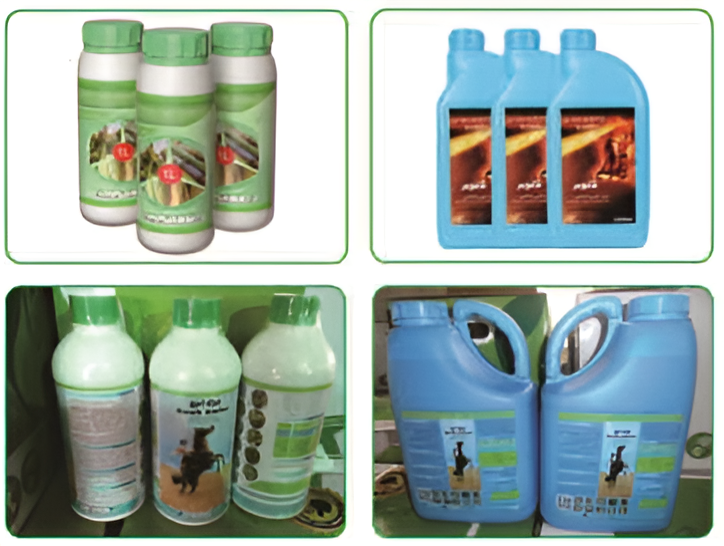
98% Tech, 720 g/L, 860 g/L SL