
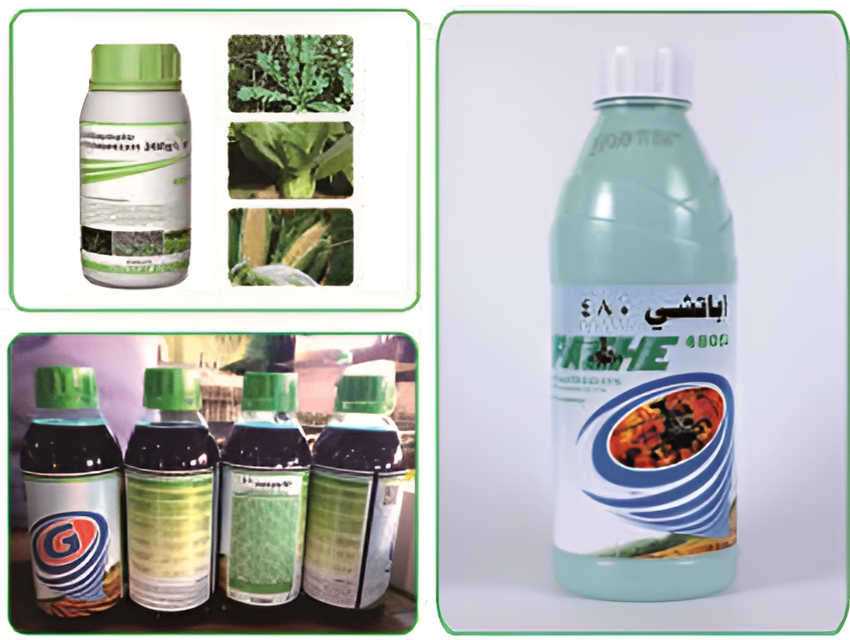
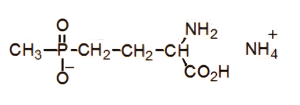
Common name: Glufosinate-ammonium
Chemical name:
ammonium (?-2-amino-4-hydroxymethylphosphinyl)butanoate
Chemical class: Herbicide
Molecular formula: C5H16N3O4P
CAS NO.: 77182-82-2
Properties:
Form Crystalline solid, with a slightly pungent odour.
M.p. 215°C. V.p. <0.1 mPa (20°C). KOW logP <0.1 (pH 7, 22°C). Henry 4.48×10⁻⁹ Pa m³ mol⁻¹ (calc.). S.g./density 1.4 (20°C). Solubility in water 1370 g/l (22°C). In acetone 0.16, ethanol 0.65, ethyl acetate 0.14, toluene 0.14, hexane 0.2 (all in g/l, 20°C). Stability Stable to light.
Mode of action:
Non-selective contact herbicide with some systemic action. Translocation occurs only within leaves, predominantly from the leaf base to the leaf tip.
Usage:
Glufosinate-ammonium is used for control of a wide range of annual and perennial broad-leaved weeds and grasses in fruit orchards, vineyards, rubber and oil palm plantations, ornamental trees and bushes, non-crop land, and pre-emergence in vegetables. Also used as a desiccant in potatoes, sunflowers, etc. For control of annual and perennial weeds and grasses in glufosinate-tolerant crops (olised rape, maize, soya beans, sugar beet) developed through gene technology. Applied at 0.4-1.5 kg/ha.
Normal Formulations:
95% Tech, 50% Tech, 200 g/L SL